Cruise Cabin Comparison for Your Best Fit
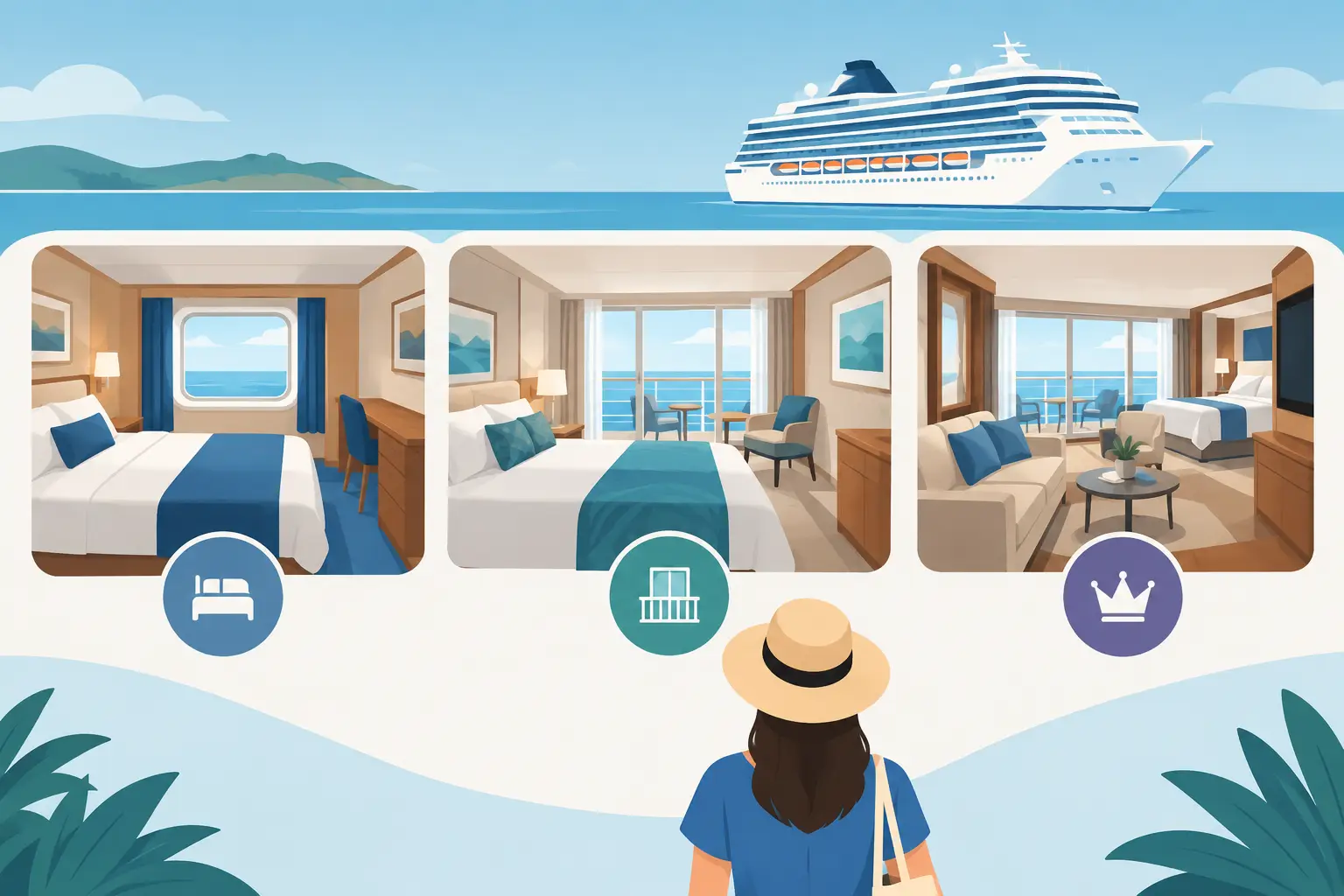
The difference between a good cruise and the trip you talk about for years can be one deck, one hallway, or one decision about whether a balcony is worth it. A thoughtful cruise cabin comparison is not simply about square footage or the number on the quote. It is about how you want to wake up, rest between ports, manage family routines, and feel when the ship is moving through open water.
For some travelers, an interior cabin is a smart way to prioritize suites, shore experiences, and a longer itinerary. For others, private outdoor space is the entire point: morning coffee overlooking Santorini, a quiet sea day with a book, or an unhurried glass of Champagne before dinner. The right answer depends on your travel style, sailing route, ship, and tolerance for motion and noise.
Cruise Cabin Comparison: Start With How You Travel
Before comparing cabin categories, consider how you will actually use the room. Guests who treat their stateroom as a place to shower, change, and sleep can often find excellent value in an interior or ocean-view cabin. Travelers taking a seven-night Caribbean sailing with full days by the pool and late evenings at shows may not need a larger room.
A balcony or suite becomes more compelling on itineraries where the journey itself is part of the scenery. Alaska, Norway, the Mediterranean, the Danube, the Nile, and expedition routes reward travelers who want a private place to watch the world pass. On an ocean crossing or a long itinerary with several sea days, extra living space can also change the rhythm of the trip.
Families should look beyond the headline occupancy. A cabin that sleeps four may do so with a pull-down berth and a sofa bed, leaving very little floor space once everyone is dressed and moving. Connecting cabins, a true family suite, or two nearby cabins may offer a more comfortable arrangement, particularly for multigenerational travel.
Interior Cabins: Best for Value and Deep Sleep
Interior cabins have no window or balcony, but they are far from a compromise for every traveler. They tend to be the most budget-conscious option, allowing guests to allocate more toward premium dining, private shore excursions, spa time, or a longer voyage. Their darkness can be especially welcome for travelers who sleep deeply only in a fully dim room.
They are also practical for active guests. If you are off the ship early in every port, returning only to change for dinner, and spending sea days in the ship’s public spaces, paying for a view you rarely use may not feel worthwhile.
The trade-off is psychological as much as physical. Without natural light, it can be harder to tell whether it is morning or afternoon, and some guests find a window essential on a week-long sailing. An interior cabin is less appealing for anyone prone to claustrophobia, working remotely during the voyage, or traveling with young children who need room to play and reset.
Ocean-View Cabins: Natural Light Without the Balcony Price
An ocean-view cabin adds a porthole or picture window, bringing in daylight and a sense of place without the higher cost of private outdoor space. This category often represents the sweet spot for guests who want to see the sea from bed, get their bearings each morning, and preserve more of the trip budget for experiences ashore.
Not all ocean views are equal. Some have a clear, expansive window; others are partially obstructed by lifeboats or ship equipment. An obstructed view can still be a terrific value, but it should be chosen knowingly. A cabin marketed as ocean view may offer daylight rather than a picture-perfect panorama.
On certain ships, ocean-view cabins are concentrated on lower decks. That can be a benefit for guests concerned about motion, since lower and more centrally located cabins generally feel more stable. It can also mean being farther from the pool deck, lounges, and restaurants. The best location depends on whether fewer steps or a steadier ride matters more to you.
Balcony Cabins: Privacy, Fresh Air, and a Better Sense of the Journey
For many first-time cruisers, a balcony cabin is the category that turns a shipboard vacation into something more personal. You have a private threshold between your room and the destination: sea breezes at sunrise, a quiet retreat during a busy afternoon, and front-row views while entering port.
Balconies are especially valuable on scenic sailings. In Alaska, for example, they offer a peaceful place to spot wildlife and take in glacier days without competing for rail space. In the Greek Islands or the French Riviera, they create a beautiful pause between one indulgent port day and the next.
Still, a balcony is not automatically the best choice. Some balconies are shaded by an overhang, overlooked by upper decks, or positioned where wind makes them difficult to enjoy at sea. Others sit above or below late-night venues, creating noise that can diminish the upgrade. Cabin category matters, but deck plan placement matters just as much.
Guests who value privacy should ask whether the balcony is recessed, exposed, or connected to adjoining cabins by a removable divider. That divider can be wonderful for a group reserving neighboring cabins and less ideal for travelers seeking complete seclusion.
Suites: When Space and Service Change the Cruise
A suite can deliver far more than a larger room. Depending on the cruise line, suite guests may receive priority boarding, dedicated dining areas, concierge assistance, expanded room service, premium beverages, laundry service, private lounge access, or priority seating for shows and tender boats. On luxury and ultra-luxury ships, the suite itself may be the standard, with inclusions that make the overall value equation more favorable.
This category is particularly compelling for honeymooners, travelers celebrating a milestone, guests who entertain family members onboard, and multigenerational groups who need a comfortable gathering space. A suite with a separate living room gives everyone more breathing room and allows parents or grandparents to relax after younger travelers have gone to sleep.
The most meaningful suite comparison is not always between a standard cabin and the largest penthouse. Sometimes a junior suite or entry-level suite offers the best balance of additional space and access to elevated service. Other times, the fare difference is better invested in business-class flights, a private transfer, or exceptional experiences in port.
Location Is Often More Important Than Category
Two cabins in the same category can provide dramatically different experiences. Midship, lower-deck cabins are usually a reassuring choice for travelers concerned about seasickness. Cabins near elevators can be convenient, but those directly beside busy stairwells or service doors may bring more foot traffic and sound.
Look carefully at what sits above, below, and beside the cabin. A room under the pool deck, buffet, theater, nightclub, or fitness center may be noisier than expected. A cabin near a crew area can also mean early-morning activity. Conversely, a slightly farther cabin in a quiet hallway can feel like a meaningful luxury after a full day ashore.
Forward cabins can offer dramatic views but may feel more motion in rougher seas. Aft cabins can be wonderfully peaceful and close to certain dining venues, though vibration and wake noise vary by ship. There is no universal “best deck.” There is only the placement that best supports your priorities.
Special Considerations for Families, Solo Travelers, and Accessible Travel
Families should confirm the exact bed configuration rather than assuming a cabin’s maximum occupancy will work for everyone. Verify whether the children’s beds are fixed, pulldown, or converted each evening, and consider bathroom logistics before committing. Two connecting cabins can offer more privacy and often two bathrooms, while a family suite provides togetherness and shared space.
Solo travelers should seek cabins designed for one, particularly on newer ships and select luxury lines. A standard double cabin can carry a significant single supplement, so the lowest advertised fare is not always the most relevant number. Solo lounges and hosted gatherings may also add a welcome social element without requiring constant participation.
Accessible cabins need early attention. These rooms are limited, and true accessibility involves more than a wider doorway. Travelers may need a roll-in shower, grab bars, accessible balcony thresholds, proximity to elevators, or specific mobility equipment accommodations. The right planning makes a tremendous difference in comfort and independence.
Let the Itinerary Lead the Decision
A warm-weather Caribbean itinerary may justify a different cabin choice than a cool-weather fjord voyage. On a port-intensive European cruise, you may prefer an ocean-view room and reserve your splurge for private guides, remarkable meals, and a few extra hotel nights before or after sailing. On an Antarctica expedition or a scenic river journey, a balcony or French balcony can make the destination feel close at every hour.
This is where a cabin decision benefits from real context: the exact ship, sailing date, route direction, port times, promotions, and how you want the trip to feel. Lucy at Lucy Trails Atelier can compare the details that do not always appear clearly on a booking screen, then manage the many moving pieces around your sailing. You receive a human advocate from cabin selection through unexpected flight changes, so you send one text rather than spending precious vacation time on hold.
Choose the cabin that gives you the right kind of exhale. Whether that is an intelligently priced interior room, a sunlit ocean view, a private balcony, or a suite with room to celebrate, the best cabin is the one that makes every day at sea feel more like your own.