Gorilla Trekking Packing Guide for Comfort
The first hour of a gorilla trek can feel wonderfully cinematic: mist caught in the canopy, a ranger leading the way, and a quiet forest that seems to hold its breath. The second hour may involve steep, muddy ground, tangled vegetation, and rain arriving without invitation. This gorilla trekking packing guide is designed for travelers who want to meet that moment prepared, comfortable, and fully present when the gorillas appear.
A gorilla trek is not a fashion expedition, but it does reward thoughtful packing. Your goal is to stay dry enough, protected enough, and mobile enough to enjoy an extraordinary wildlife encounter without being distracted by wet socks, overheating layers, or an overstuffed daypack.
Gorilla Trekking Packing Guide: Start With the Right Layers
Mountain gorilla treks in Rwanda’s Volcanoes National Park and Uganda’s Bwindi Impenetrable National Park or Mgahinga Gorilla National Park take place in lush, high-elevation environments. Mornings can be cool, the forest can be humid, and rain is possible in every season. The weather changes quickly, especially once you begin moving through dense vegetation.
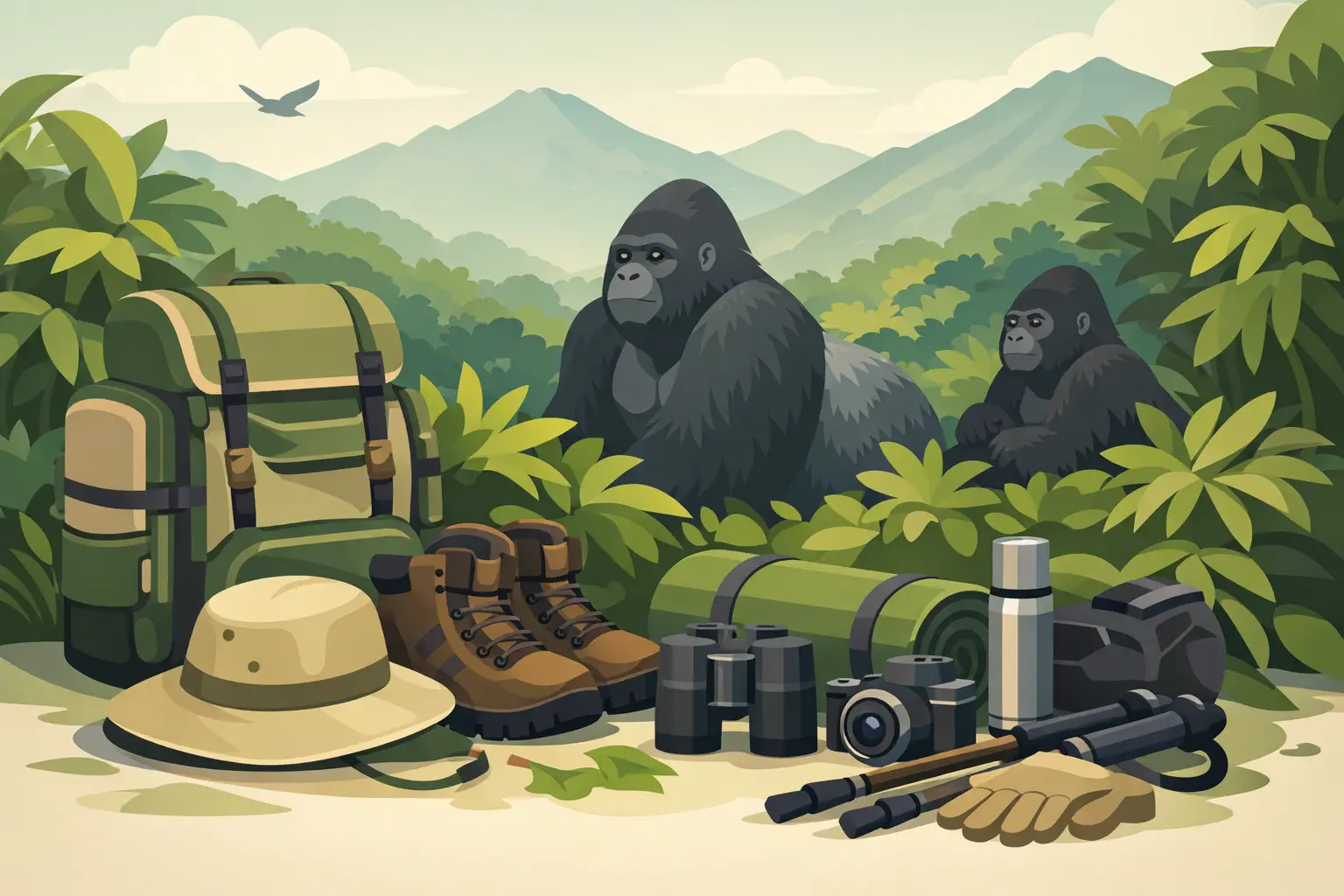
Wear a lightweight, moisture-wicking base layer with long sleeves, then add a breathable mid-layer such as a fleece or light insulated jacket. A waterproof shell belongs in your pack even if the morning begins bright and clear. Choose one that is genuinely rainproof, not simply water-resistant, and roomy enough to fit over your other layers.
Long hiking pants are essential. They protect your legs from nettles, thorns, mud, and insects far better than leggings, shorts, or thin travel pants. Many experienced trekkers prefer durable hiking pants with some stretch, because the trail may require stepping high over roots or crouching under branches. Neutral greens, browns, grays, and khakis are practical choices. Avoid bright colors and camouflage patterns, which are not appropriate in national parks.
A small but useful detail: bring gaiters if you dislike mud and debris finding their way into your boots. They are particularly worthwhile during wetter months or on routes with thick undergrowth. They are not mandatory for every traveler, but they can make a surprisingly large difference by the end of the day.
Boots Matter More Than Almost Anything Else
The best footwear for gorilla trekking is a pair of broken-in, waterproof hiking boots with ankle support and reliable traction. “Broken-in” is the operative phrase. A new pair of premium boots can still cause blisters if they have not been worn on several long walks before departure.
The terrain varies by assigned gorilla family and daily conditions. Some treks are relatively moderate; others can involve several hours of climbing and slippery descents. Rwanda often offers more structured approaches and, depending on the family, somewhat shorter hiking times, while Bwindi can be especially steep, muddy, and physically demanding. Neither destination guarantees an easy day, so pack for the more challenging version of the experience.
Wear moisture-wicking hiking socks, preferably merino wool or a technical synthetic blend, and bring one spare pair in a waterproof pouch. Changing into dry socks after the trek is one of those small luxuries that feels remarkably good. Skip cotton socks, which hold moisture and tend to increase friction.
Protect Your Hands, Face, and Lower Legs
Garden gloves or lightweight work gloves may sound unglamorous, but they are one of the smartest items in your bag. On narrow trails, you may steady yourself on vegetation, move aside a branch, or use your hands on a muddy incline. Gloves provide protection from thorns and stinging plants while keeping your hands cleaner.
A brimmed hat helps with drizzle and sun exposure in more open sections of trail. Add sunglasses if you are sensitive to glare, though you may not use them under the forest canopy. Insect repellent should be applied before departure, with particular attention to exposed skin, while sunscreen remains useful at the trailhead and during transfers.
For travelers who prefer additional protection, tuck your pants into your socks or gaiters. It is not the most polished look of the trip, but it is a sensible choice in dense forest. Save the lodge linen, safari neutrals, and celebratory dinner attire for later that evening.
Pack a Small, Well-Organized Trekking Daypack
Your main suitcase stays at the lodge. For the trek, a compact daypack with comfortable shoulder straps is enough. A rain cover or waterproof liner is valuable, since a sudden downpour can soak an unprotected bag quickly.
Bring a refillable water bottle or hydration bladder, but do not overload yourself. Your guide will advise on the likely duration and pace, and many lodges can prepare a packed lunch or snacks if your schedule requires them. Energy bars, trail mix, dried fruit, or a simple sandwich are sensible choices. Keep food securely packed and follow ranger instructions about when and where to eat.
A few items deserve their own dry bag or zip pouch: your phone, camera, passport copy, permit paperwork if supplied to you, medication, and a compact power bank. You will want photos, but you will not want to spend the day worrying about electronics in rain or mud.
A porter is available at the trailhead and is highly recommended, even for fit travelers. Porters support the local community and can carry your daypack, assist on steep ground, and help you keep your energy focused on the experience rather than the logistics. You should still keep valuables, medication, and essentials you need during the walk on your person.
Camera Gear: Keep It Simple and Respectful
You will generally have one hour with the gorillas once the group is located. It is a powerful, fast-moving hour, and the best photographs often come from being ready rather than from carrying every lens you own.
A mirrorless camera or DSLR with a versatile zoom lens is ideal if photography is a priority. A phone can also capture beautiful images in good light, particularly if it is protected in a waterproof case. Avoid flash, follow the ranger’s direction about distance, and remember that the encounter is not a staged wildlife viewing. The family may be partially obscured by leaves, moving through brush, or sitting close enough that a wide lens is more useful than a long one.
Bring a lens cloth and keep your equipment dry. A bulky tripod is rarely worth the effort. If you use a camera strap, choose one that is secure and comfortable while walking, not one that swings into vegetation.
What to Wear Before and After the Trek
The trekking uniform should be functional. The rest of your packing can be much more relaxed and refined. Bring comfortable lodge clothing for fireside drinks, a restorative lunch, or an evening at the spa after a muddy morning in the forest. A soft knit, clean sneakers, and a warm layer are welcome in the cool highland evenings.
For your travel days, include a light jacket and an extra change of clothes in an accessible bag. Treks can run longer than expected, and returning to the lodge in dry, fresh clothing makes the transition from adventure to comfort feel effortless. If your itinerary includes safari, Kigali, Queen Elizabeth National Park, or a beach extension afterward, plan a separate capsule wardrobe rather than trying to make trekking gear work everywhere.
Do Not Forget the Health and Comfort Essentials
Your packing list should reflect your personal needs, but a few essentials are consistently helpful: any prescription medication in original containers, blister pads, pain reliever, electrolyte packets, hand sanitizer, tissues, and a small personal first-aid kit. Travelers prone to motion sickness may also appreciate medication for winding transfers through the hills.
Altitude is not usually extreme at the trailhead, but the combination of elevation, exertion, humidity, and uneven terrain can be tiring. Build in a gentle arrival day when possible, hydrate well, and be candid during trip planning about mobility, injuries, or concerns about hiking stamina. Gorilla trekking is accessible to a wide range of travelers, yet the right gorilla family assignment and support arrangement can significantly shape the day.
Pack for the Trek You Are Actually Taking
There is no single “correct” gorilla trek. A honeymoon couple looking for a private, elevated Rwanda itinerary may prioritize lodge comfort, private transfers, and a gentler route request. An active family may be ready for a longer Uganda trek with a porter for each guest. Travelers with limited mobility can explore sedan chair options in certain locations, arranged in advance and subject to availability.
That is why the best packing plan begins with the itinerary, season, lodge location, and your own comfort level. Lucy Trails Atelier can coordinate the moving pieces around the trek, from thoughtful routing and private ground transportation to lodge stays that give you a warm welcome, a hot shower, and a beautifully prepared meal after the forest. You send one text if timing or plans change.
Pack for rain, mud, and a little exertion, then leave room for the wonder of it. When a young gorilla tumbles through the leaves or a silverback settles quietly nearby, the right gear should disappear from your mind entirely.