Safari Migration Seasons: When to Go and Why
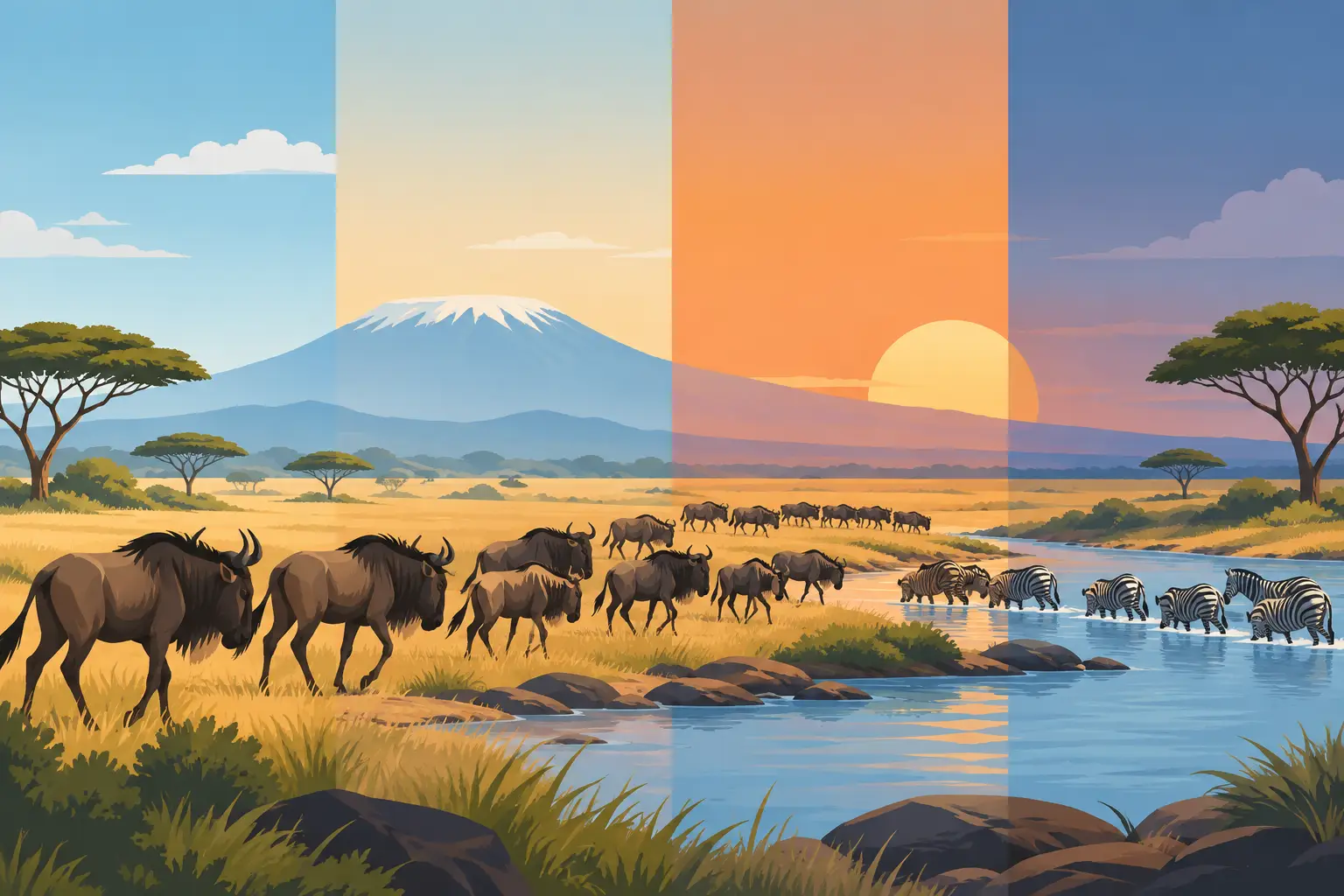
The sound arrives before the spectacle: hooves drumming across open grassland, low calls carrying through the early light, and thousands of wildebeest moving with a purpose that feels almost prehistoric. Safari migration seasons are not a single event with a dependable start date. They are a living cycle shaped by rain, fresh grazing, river levels, and the instinct of nearly two million animals.
For travelers, that distinction matters. The question is not simply, “When is the Great Migration?” It is: what do you most want to witness, how much uncertainty feels exciting rather than stressful, and what kind of safari rhythm will make the journey feel extraordinary? A calving safari in the southern Serengeti, a river-crossing stay in northern Tanzania, and a Kenya escape during the Mara’s busiest months are each remarkable, but they offer very different days in the vehicle, landscapes, and camp atmosphere.
Safari Migration Seasons Are Led by Rain
The Great Migration follows a broad, clockwise circuit between Tanzania’s Serengeti ecosystem and Kenya’s Maasai Mara. Wildebeest lead the movement, accompanied by zebra and gazelle, while lions, cheetahs, hyenas, crocodiles, and other predators follow the opportunity. Yet the route is not a rail timetable. Rainfall can bring the herds earlier or later, split them into separate groups, or keep them in one area longer than expected.
That is why a safari should be designed around a seasonal probability, not a promise of one cinematic moment. A skilled guide, a well-positioned camp, and enough flexibility in your itinerary matter more than chasing a date on a map. If river crossings are your dream, for example, build in several nights near the Mara River rather than arriving for a single night and hoping the herds cooperate.
The migration is also worth seeing beyond its headline moments. A vast herd feeding quietly across green plains can be as moving as a dramatic crossing. Travelers who leave room for the whole ecosystem often come home with the richer story.
January Through March: Calving in the Southern Serengeti
From roughly January through March, depending on the short rains and grass conditions, the herds gather on the nutrient-rich plains of the southern Serengeti and Ngorongoro Conservation Area. This is calving season, when hundreds of thousands of wildebeest are born in a remarkably concentrated period. The scale can be astonishing: new calves finding their footing within minutes, zebra moving through the haze, and predators carefully watching the open plains.
This season is particularly compelling for guests interested in animal behavior, photography, and big-cat action. The terrain is wide and open, which can make sightings feel beautifully unobstructed. It is also an excellent choice for couples and families who value a more intimate interpretation of the migration rather than the peak-season anticipation around river crossings.
There are trade-offs. Afternoon showers are possible, and some areas can be more difficult to reach after heavy rain. The visual reward, however, is a Serengeti at its greenest and most abundant. For a honeymoon or celebratory trip, this can be a lovely time to pair a safari with a few restorative nights on Zanzibar’s coast.
April and May: The Long Rains and the Western Journey
During April and May, the long rains transform the Serengeti. The herds generally begin moving west and northwest, drawn toward new grazing. This is often called the green season, and it can be one of the most rewarding periods for travelers who prioritize space, softer light, dramatic skies, and value over guaranteed dry weather.
Rain does not mean it pours all day, every day. Often, storms arrive in the afternoon or overnight, leaving crisp mornings for game drives. Still, road conditions can be muddier, and some seasonal camps close or alter operations. This is a moment for thoughtful camp selection, rather than assuming every property offers the same experience.
For travelers with flexible schedules, May can provide an especially soulful safari. There may be fewer vehicles at sightings, rates can be more favorable than prime dry-season dates, and the landscape feels lush rather than dusty. If your priority is a polished, quiet, deeply immersive safari rather than a particular river-crossing image, this is a season worth serious consideration.
June Through July: Grumeti Crossings and the Northern Push
As the rains fade, the migration typically continues westward through the central and western Serengeti before pressing north. June and July can bring activity around the Grumeti River, where crocodiles wait in the water and the herds gather, hesitate, and sometimes surge across. These crossings can be thrilling, though they are less predictable and often less concentrated than the better-known Mara River scenes.
This period begins the classic dry-season safari window. Days are generally cooler and clearer, vegetation thins, and wildlife is easier to spot around water sources. It suits first-time safari travelers who want excellent general game viewing alongside a strong chance of encountering migration movement.
June and July are also popular months for multigenerational trips because much of the United States is on summer break. The right itinerary can balance early morning game drives with leisurely lunches, private family vehicles, and camps that welcome younger guests while preserving a sense of refinement. Booking early matters, especially for connecting family tents, private villas, or exclusive-use safari houses.
August Through October: Mara River Drama in Tanzania and Kenya
For many travelers, August through October is the most recognizable chapter of safari migration seasons. The herds often reach the northern Serengeti and spill into Kenya’s Maasai Mara, with river crossings possible on either side of the border. The images are iconic for good reason: animals bunching on the banks, dust rising behind them, and a sudden, collective rush into the current.
But a crossing is never scheduled. Herds can stand at a riverbank for hours, turn away, or cross while you are elsewhere on a game drive. The most successful trips are designed with realistic expectations and sufficient time in the region. Four or five nights in the northern Serengeti or Maasai Mara gives your guide time to follow the day’s best information without making every drive feel like a race.
The choice between Tanzania and Kenya depends on your priorities. Northern Tanzania often feels more remote and pairs naturally with a longer Serengeti itinerary. Kenya’s Maasai Mara can offer exceptional density of wildlife, varied accommodations, and convenient connections for an itinerary that also includes Nairobi, the Laikipia region, or the coast. In either destination, peak dates bring higher demand and a greater number of vehicles at major sightings, so privacy should be planned rather than assumed.
November and December: The Return South
As the short rains arrive, usually from November into December, fresh grass calls the herds back toward the eastern and southern Serengeti. This transitional period is sometimes overlooked, which is precisely part of its appeal. The migration may be dispersed, but the feeling of renewal is powerful: thunderheads on the horizon, newborn greenery, and animals moving across landscapes that have changed character again.
This is a wonderful option for travelers who want to combine safari with a festive-season escape, although Christmas and New Year’s availability can be extremely limited. Outside those holiday weeks, November can offer a more relaxed pace and attractive opportunities for travelers comfortable with weather variability.
How to Choose the Right Migration Safari
Start with the experience, not the calendar. If you want to see newborn animals and predator behavior, aim for the southern Serengeti in early year. If a river crossing is the central dream, concentrate your time in the northern Serengeti or Maasai Mara between roughly August and October, while accepting that nature writes the final script. If you value fewer crowds, verdant landscapes, and a more considered price point, the green seasons may be the better fit.
Your travel style should guide the route as much as wildlife timing. A first safari can benefit from a classic combination of varied ecosystems, knowledgeable guiding, and comfortable flight connections. Returning safari guests may prefer a mobile camp that follows the herds, walking safaris in private concessions, or a slower itinerary with fewer internal flights. Families may need camps with clear age policies and flexible dining, while honeymooners may prefer an intimate tented setting with private plunge pools or outdoor baths.
It is also wise to allow for the physical realities of safari. Game drives begin early, roads can be bumpy, and internal luggage limits are often strict. None of that diminishes the experience, but it does make careful planning valuable. The right pacing protects the pleasure of the trip, especially when it includes long-haul flights, multiple reserves, or a beach extension.
A thoughtfully designed migration safari gives you more than a front-row seat to wildlife. It gives you the right camp in the right region, enough time for nature to unfold, and someone paying attention when weather, flights, or conditions shift. With Lucy Trails Atelier, you send one text when plans change, while your journey remains centered on what you came for: that unforgettable moment when the plains begin to move.
Ready to plan your safari?
Whether you're dreaming of the Great Migration, a first safari, or a safari-and-beach escape, I'll help you choose the right season, camps, and route for the experience you want.
Plan Your Safari