A Private Tour Itinerary Example for Italy
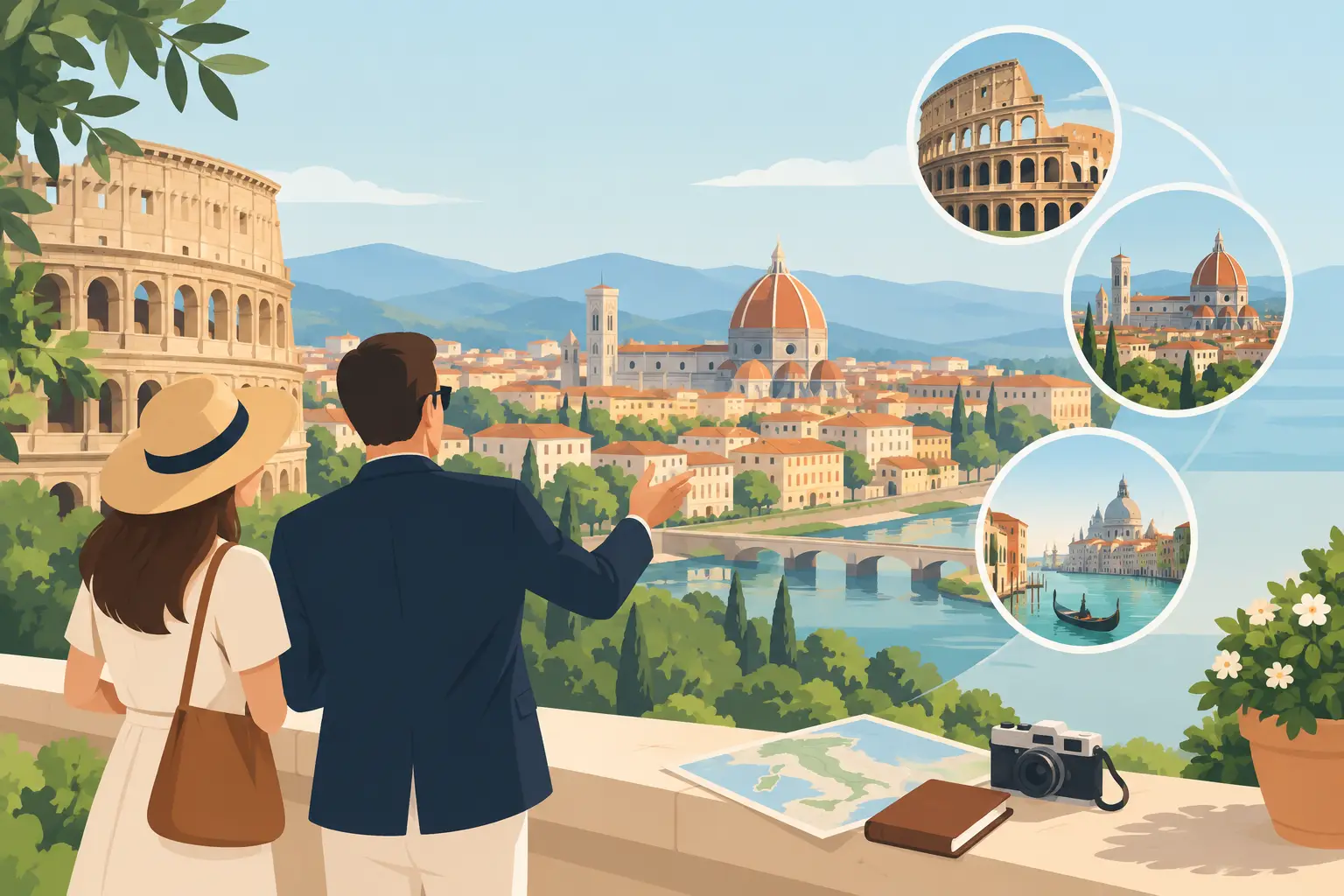
A private tour should not feel like a string of reservations handed over in a tidy PDF. It should feel as though someone has quietly removed every unnecessary decision from your day while leaving room for the moments you did not know you would love. This private tour itinerary example follows a five-night Italian escape for a couple who wants art, food, beautiful hotels, and time to actually enjoy them.
The destination could change, of course. The underlying approach does not: arrive well, see the essential places with context, build in breathing room, and make every transfer feel considered rather than transactional.
What Makes a Private Tour Worth Planning?
Private touring is not simply about having a car and guide on call. The real value is in the choreography. A well-designed itinerary considers flight arrival time, jet lag, museum entry patterns, walking tolerance, restaurant pacing, luggage handling, and the difference between a scenic route and the fastest one.
It also makes room for personal preferences. One traveler may be happiest with an early morning at the Uffizi Galleries before the crowds arrive; another may prefer a leisurely breakfast, a private artisan visit, and an unplanned afternoon for shopping. Neither choice is more luxurious. Luxury is having the day shaped around you.
For this example, imagine a couple arriving from the United States for their first visit to Florence and Tuscany. They appreciate fine dining but do not want every meal to become an event. They enjoy history when it is told well, prefer thoughtful local encounters over checking off landmarks, and want one or two particularly memorable splurges without an overpacked schedule.
Private Tour Itinerary Example: Five Nights in Florence and Tuscany
Day 1: A Soft Landing in Florence
After landing in Florence, or arriving by high-speed rail from Rome, your private driver meets you at the airport or station and takes care of the transfer to your hotel. For a first visit, the right property may be steps from the Arno, in the quiet Oltrarno neighborhood, or near the Duomo depending on whether you value immediate access, serene evenings, or a grand historic setting.
The afternoon is deliberately light. Check in, settle into your room, and take a gentle orientation walk with a private guide who understands that this is not the time for a three-hour lecture. A stroll across Ponte Vecchio, through Piazza della Signoria, and past the glowing storefronts of Via de' Tornabuoni offers a sense of place without draining the energy you will want tomorrow.
Dinner is reserved close to the hotel, with timing based on your arrival. A good first-night restaurant is less about chasing the city's most difficult table and more about excellent food, warm service, and an easy walk home. If your eligible hotel booking includes breakfast, a property credit, welcome amenities, or an upgrade if available, Lucy confirms those details before booking rather than assuming they apply.
Day 2: Florence Before the City Fully Wakes
An early private entry or carefully timed visit to the Uffizi Galleries sets the tone for the day. With the right guide, this is not a race through famous paintings. It is a focused conversation about the Medici family, Renaissance ambition, and the artists whose work changed how Europe saw the world. The guide can tailor the visit around your interests, whether that means Botticelli, architecture, fashion history, or simply a manageable introduction to an overwhelming collection.
Afterward, pause for coffee before continuing to the historic center. See the Duomo from outside, visit the Baptistery or Opera del Duomo Museum if desired, and leave enough time for lunch without a reservation stacked immediately afterward.
The afternoon stays open. This is the difference between an itinerary that looks impressive and one that travels well. You might visit independent boutiques, rest at the hotel, book a spa treatment, or wander the Oltrarno with a short list of worthwhile ateliers. Your advisor can arrange a private shopping guide when it adds value, but not every traveler needs one.
That evening, a reservation at a more celebrated restaurant can be the right choice. If the couple prefers something more relaxed, the itinerary can shift the special dinner to their Tuscany day instead.
Day 3: The Tuscany You Cannot Find by Accident
A private driver-guide collects you after breakfast for a full day in the countryside. Rather than attempting Siena, San Gimignano, Chianti, and three wineries in one breathless outing, choose a clear focus. Here, the day is built around Chianti Classico, with enough time to appreciate it.
The route follows quieter roads through olive groves, vineyards, and stone villages. Your first visit might be a family-run estate where the tasting is hosted by someone connected to the land, not delivered as a hurried counter experience. Depending on the estate and season, this could include a cellar visit, olive oil tasting, or lunch overlooking the vines.
In the afternoon, stop in a small town such as Greve, Panzano, or Montefioralle. The exact village matters less than the pace. You have time for a short walk, a gelato, and photographs without watching the clock every ten minutes.
This is also where private planning earns its keep. A driver who knows the region can adjust for weather, harvest activity, local closures, and traffic. If you would rather spend the day cooking with a local chef, visiting medieval Siena, or touring Brunello country farther south, the structure changes. There is no universal best Tuscany day.
Return to Florence before dinner. A quiet evening in the hotel bar or a simple neighborhood trattoria may be exactly right after a long, sunlit day outdoors.
Day 4: Choose Your Florence
By day four, the itinerary becomes more personal. For travelers drawn to sculpture and powerful architecture, a private morning at the Galleria dell'Accademia and the Medici Chapels may be ideal. For those who have had enough museums, a hands-on experience offers a better counterpoint: a leather workshop, fragrance appointment, food market visit, or private pasta-making class.
A strong itinerary gives the day a center but leaves its edges flexible. Perhaps lunch is planned at a rooftop restaurant with views over the city, followed by several unstructured hours. Or perhaps a guide takes you into lesser-visited neighborhoods to see Florence beyond the postcard views.
This evening is a chance for one elevated experience: an intimate classical concert, a private after-hours palazzo visit when available, or a special tasting-menu dinner. Availability varies, especially during high season, so the experience should be selected early rather than treated as a last-minute add-on.
Day 5: A Day Trip With a Different Rhythm
For the final full day, travel by private vehicle to Lucca and the Tuscan coast, or head east into the Val d'Orcia. The better choice depends on the season and the travelers themselves.
Lucca suits couples who enjoy elegant streets, cycling atop ancient walls, and a softer day than the drama of Florence. A private guide can bring the city's music history and Roman roots to life, while lunch might be arranged in a garden restaurant or at a countryside villa nearby.
Val d'Orcia is the choice for rolling landscapes, pecorino cheese, Brunello wine, and hill towns such as Pienza and Montepulciano. It is visually spectacular, but it involves more driving. For some travelers, that is part of the pleasure. For others, a shorter route is wiser. The most beautiful itinerary is not necessarily the one with the most miles.
Return to Florence for a final dinner. A thoughtful touch might be a table at a restaurant that feels distinctly Florentine, rather than the most photographed choice online. The right goodbye meal should match the trip's mood: celebratory, easy, and memorable without feeling staged.
Day 6: Departure Without Loose Ends
Your driver arrives at the appropriate time for your departing train or flight, with luggage and timing accounted for. If an early departure requires breakfast to be packed or a different transfer arrangement, those details are addressed before the final morning.
This may sound simple, but departure day is where poorly coordinated trips often unravel. A private itinerary protects the final hours of a vacation just as carefully as the first.
The Details That Change the Experience
A private tour itinerary works best when accommodations, guides, dining, and transportation are designed together. Booking a wonderful hotel without considering its distance from morning meeting points can create daily friction. Selecting a famous winery without accounting for driving time can turn a relaxed countryside day into a rushed one.
The same is true of private guides. The best guide is not automatically the most academic or the most entertaining. A family with teenagers may need someone energetic and conversational. Honeymooners may prefer a guide who knows when to step back. A traveler with limited mobility needs routes planned around comfort from the beginning, not retrofitted after bookings are made.
At Lucy Trails Atelier, the planning conversation starts with how you want to feel while traveling, not just a list of cities you have saved. From there, Lucia can coordinate the hotel, private touring, transfers, and dining rhythm into one considered journey. If a flight changes or a connection is missed, you send her a single text rather than spending precious travel time navigating a call center.
The best private itinerary leaves you with more than photos of places you visited. It leaves you with the rare feeling that every important detail was handled, and that there was still room for Italy to surprise you.