Are Safari Camps Child Friendly? What to Know
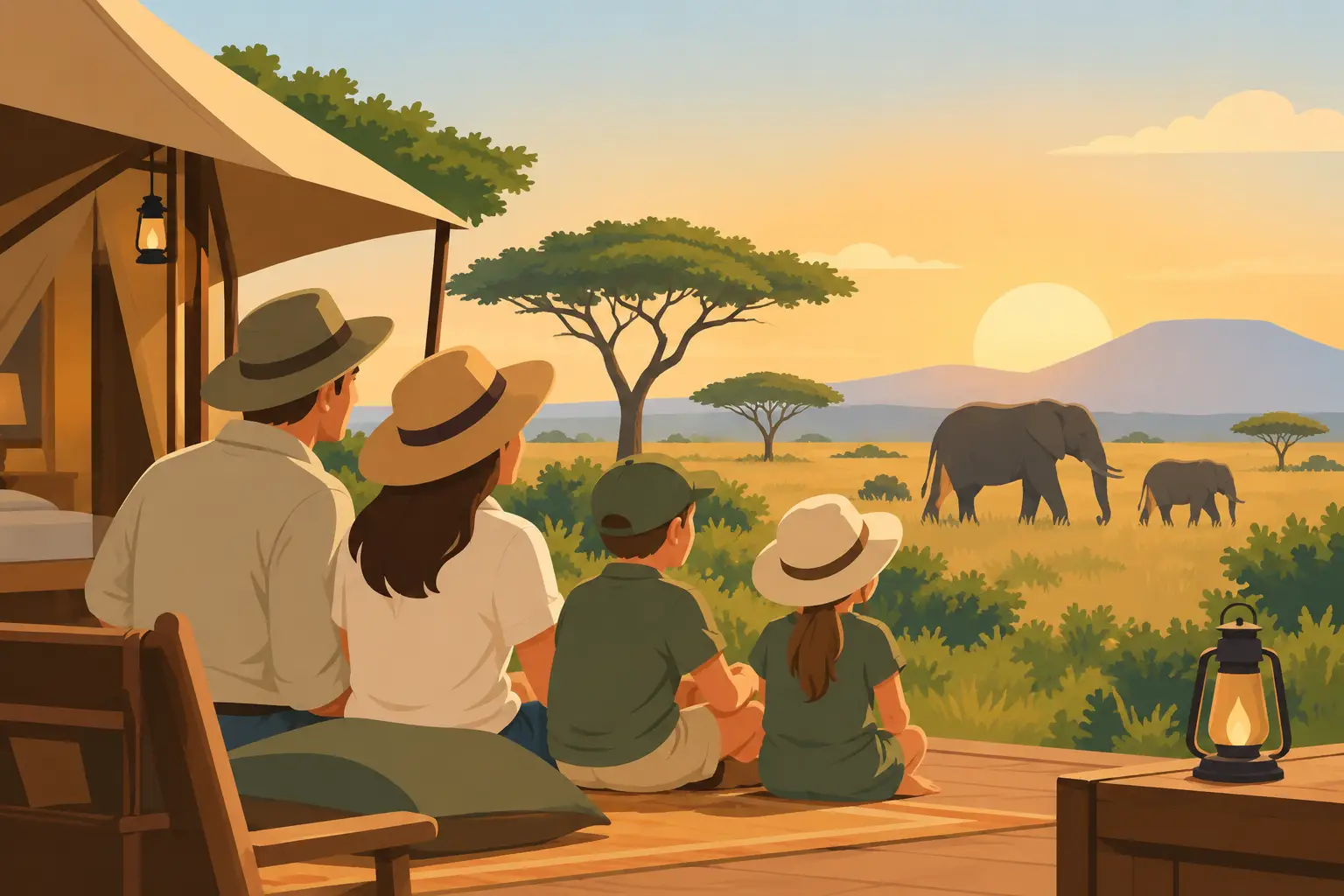
A child’s first sighting of an elephant family crossing the road can become the story they tell for years. But parents asking, “are safari camps child friendly?” deserve more than a cheerful yes. The right answer depends on the children’s ages, the camp’s layout and policies, the wildlife area, the style of safari, and how much flexibility your family needs.
A well-designed family safari can be deeply comfortable, wonderfully educational, and far less complicated than it appears. The key is choosing a camp that welcomes families in practice, not simply one that permits children on paper.
Are safari camps child friendly? Often, with the right fit
Many safari camps warmly host children, particularly properties with family tents, villas, dedicated guides, flexible activity schedules, and secure spaces between game drives. Others are intentionally adult-oriented, designed around quiet communal areas, long drives, and an unfenced setting where young children need close supervision at all times.
Age policies vary widely. Some camps accept children of all ages when a family books a private vehicle or exclusive-use villa. Others set a minimum age, commonly six, eight, or 12, and may require private guiding for younger guests. These are not arbitrary rules. They reflect safety procedures, vehicle capacity, walking-safari restrictions, meal timing, and the camp’s particular wildlife environment.
A luxury safari should not mean asking a tired six-year-old to sit still through a three-hour dawn drive because the itinerary says so. The best family arrangement builds in choice: a shorter morning outing, time at the pool, a scavenger hunt around camp, then a late-afternoon drive when everyone has reset.
The camp style matters as much as the destination
Safari camps range from polished lodges with solid walls and family suites to intimate tented camps where the soundtrack is lions calling after dark. Both can be extraordinary. They are not equally suitable for every family.
A larger lodge may offer more predictable routines, a pool, kids’ menus, connecting rooms, and a wider choice of activities. It can be an especially good introduction for families traveling with younger children or grandparents. A smaller, highly personalized camp can be ideal for older children and teens, particularly when a private guide allows the day to move at their pace.
The phrase “tented camp” can also be misleading. Some tents are expansive, beautifully appointed suites with proper bathrooms, electricity, and private decks. Others are more open to the surrounding bush. In an unfenced camp, guests are often escorted after dark, and children must understand that wildlife rules are real, not theatrical. That sense of place is part of the magic, but it requires maturity and attentive adults.
What makes a safari camp genuinely family-ready
The strongest indicators are practical rather than promotional. Start with accommodations. A family suite, interconnecting tents, or a private villa should provide enough space for bedtime routines and privacy, while keeping children close. Ask whether rooms are connected internally, how far they are from the main area, and whether the walk requires an escort after dark.
Private guiding is often the single most valuable choice for a family safari. It is not necessary for every trip, but it changes the experience considerably. Your guide can leave later, return earlier, linger with a leopard if everyone is captivated, or head back when a toddler has had enough. A private vehicle also lets curious children ask every question without worrying about the expectations of other guests.
Thoughtful camps make room for more than game drives. Depending on the property and a child’s age, that might mean tracking lessons, animal-footprint casting, junior ranger activities, nature walks within camp grounds, stargazing, cooking, fishing, or meeting local conservation teams. These quieter moments often become as meaningful as seeing the Big Five, especially for children who do not enjoy long stretches in a vehicle.
Food deserves a conversation, too. Camps are accustomed to dietary requirements, but families should confirm early whether meal times can be adjusted, familiar options are available, and snacks can be packed for drives. A beautiful bush breakfast is memorable; it is even better when no one is hungry, overheated, or negotiating over food.
Age, attention span, and safety set the rhythm
There is no universal “best age” for safari. Children as young as four or five can love it, while many families find ages seven to 14 especially rewarding: old enough to understand wildlife guidelines and patient enough for drives, yet still openly delighted by what they see. Teenagers often respond particularly well to conservation stories, photography, and the independence that comes with a private family vehicle.
Younger travelers can absolutely go, but the itinerary should be built around them. Consider fewer camp moves, shorter transfers, and two or three nights at each stop rather than racing across a country. A camp with a pool and family-focused activities may matter more than adding one more famous reserve.
Safety is handled through camp protocols and sensible behavior, not through false assurances. Children should remain close to adults, follow guides’ instructions immediately, stay quiet around wildlife, and never walk unescorted in an unfenced camp. They may not be able to join walking safaris, mokoro excursions, canoeing, or certain boat activities, even if older siblings and parents can. Those restrictions can feel disappointing until they are planned around, rather than discovered on arrival.
For many families, a split approach works beautifully: one parent takes older children on an age-appropriate specialty activity while another enjoys a relaxed camp morning with younger children. The goal is not to make every moment identical. It is to make the trip feel generous for everyone.
Choose an itinerary that protects the experience
Safari logistics can be the quiet make-or-break factor. Small aircraft flights, luggage restrictions, early wake-ups, long road transfers, and border crossings are manageable when thoughtfully sequenced. They become exhausting when piled into a short trip.
For a first family safari, prioritize a manageable routing over an ambitious country count. Pairing a wildlife-focused stay with several nights at a beach or resort can give children an appealing finish line and allow the family to recover before the journey home. It also creates a useful contrast: early mornings and thrilling game drives followed by unstructured time in the sun.
Season affects the decision. The driest months may offer easier wildlife viewing in certain regions, but they can also bring chilly dawns, dust, and busier camps. Green seasons can mean lush landscapes, newborn animals, and fewer visitors, though rain patterns and road conditions may shape daily plans. A good family itinerary weighs wildlife goals against comfort, school calendars, flight routing, and each child’s temperament.
Health planning should be equally tailored. Requirements and recommendations vary by destination, route, ages, and medical history. Families should consult their pediatrician or travel-health provider well before departure and discuss malaria prevention, vaccines, sun protection, hydration, and any needed medication. A trusted advisor can also help coordinate camps and transfers so practical needs are communicated clearly in advance.
Questions to ask before confirming a family safari
Before choosing a camp, ask direct questions that go beyond “Do you take children?” Clarify the minimum age, whether a private vehicle is required, and which activities have age limits. Confirm the precise room configuration, bathroom setup, pool supervision policies, and whether the camp is fenced or unfenced.
It is also wise to ask how often children typically stay at the property and what a typical family day looks like there. A camp may be wonderfully welcoming while still being best suited to independent teens rather than preschoolers. There is no wrong answer, only a mismatch worth avoiding.
Share the details that help shape the trip: each child’s age, confidence around animals, sleep habits, food needs, interests, and patience for driving. Mention whether this is a milestone trip, whether grandparents are joining, and whether anyone is nervous about small planes. The more candid the planning conversation, the more natural the final journey will feel.
A family safari should feel personal, not prescribed
The most successful safaris are built around your particular family, not a generic checklist. Perhaps that means two spacious camps with private guiding and no internal flights. Perhaps it means a conservation-focused itinerary for teens, followed by a few restorative beach days. For another family, it means an exclusive-use villa where grandparents can enjoy the view while younger children nap.
Lucy Trails Atelier can help match your family to camps whose policies, setting, guiding, and logistics genuinely support the trip you have in mind. With the right camp and enough breathing room in the itinerary, children do not merely come along on safari. They become part of the story of it.