Expedition Cruises Versus Traditional Cruises
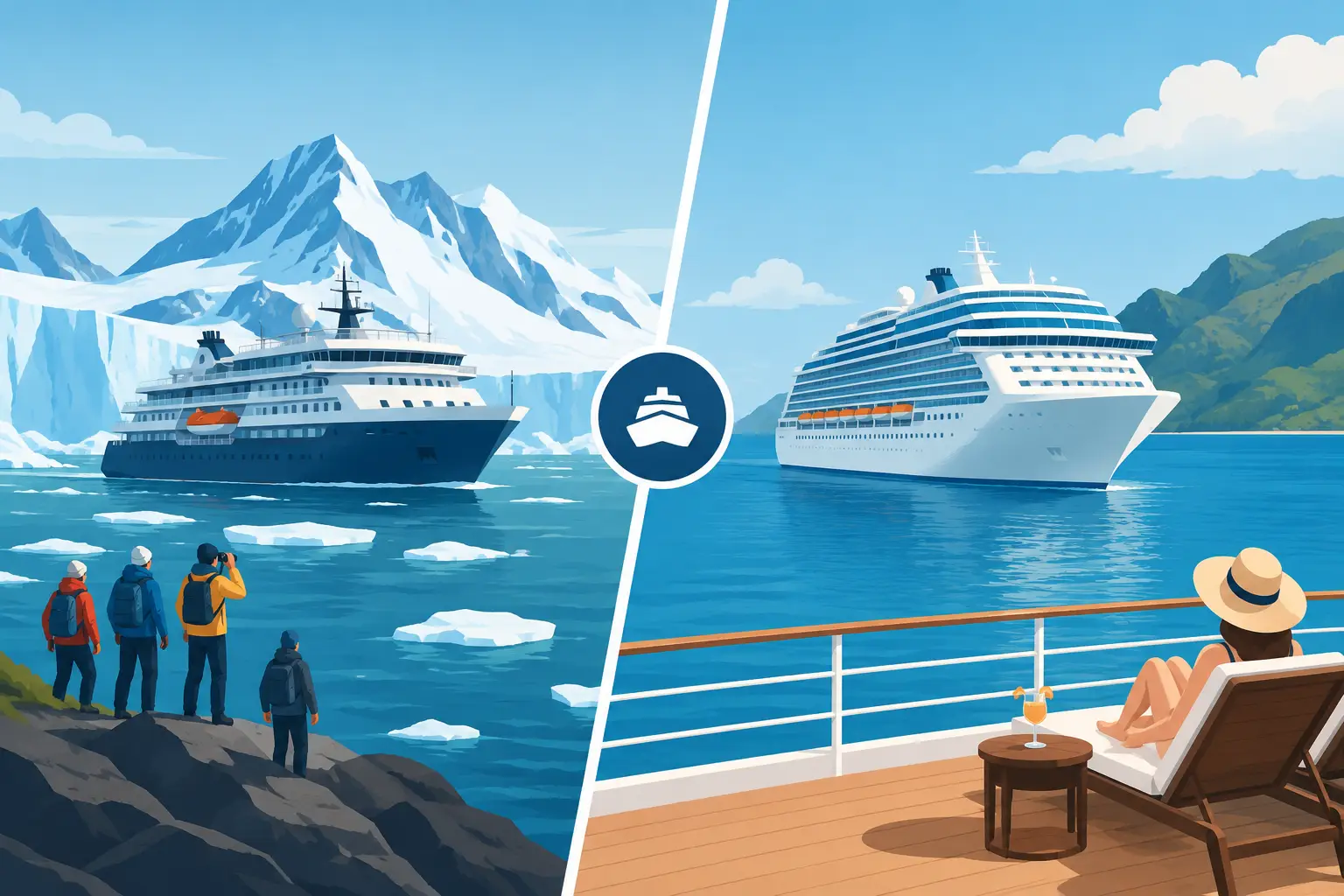
The decision between expedition cruises versus traditional cruises is not simply a choice between a small ship and a large one. It is a choice about how you want to encounter a place. Would you rather wake up to a new port with a polished promenade, dinner reservations, and a full day to explore independently? Or does the thought of stepping into a Zodiac at dawn, following a naturalist onto an untouched shore, and changing course for a pod of whales sound more like your kind of luxury?
Both can be exceptional. The right fit depends on your destination, travel style, physical comfort level, and what you want to remember most when you return home.
Expedition Cruises Versus Traditional Cruises: The Essential Difference
A traditional cruise is designed around the ship as much as the itinerary. Even on a refined ocean voyage, the vessel is a destination in its own right: multiple restaurants, lounges, entertainment, spa treatments, pools, shopping, and a broad selection of cabins. Ports often include established cities or resort areas with developed terminals, organized excursions, and time for independent sightseeing.
An expedition cruise is designed around access. These smaller vessels travel to regions where conventional cruise ships cannot easily go, including Antarctica, the Galápagos Islands, the Arctic, coastal Alaska, the Kimberley, and remote corners of the South Pacific. The daily plan is shaped by weather, wildlife, tides, and local conditions. That flexibility is not a flaw in the itinerary. It is often the point.
An expedition vessel may have fewer formal diversions, but its days are unusually full. You might kayak beside icebergs, take a guided hike, visit a conservation project, or listen to a marine biologist explain what you just saw from the deck. The luxury is less about spectacle and more about proximity, insight, and being wonderfully far from ordinary.
The Onboard Experience: Amenities or Intimacy?
Traditional cruises generally offer more choice onboard. Larger ships can accommodate a wide range of restaurants, evening productions, casinos, fitness facilities, children’s programs, and social spaces. Premium and luxury lines elevate this model with more spacious suites, attentive service, fine dining, enrichment programming, and, depending on the line and fare, inclusions such as beverages or shore excursions.
This structure suits travelers who want variety without needing to plan every hour. A couple may enjoy spending a sea day at the spa, trying a different restaurant each evening, and dressing up for a show. A multigenerational family may appreciate that grandparents can enjoy a quiet lounge while children or teens have age-appropriate activities nearby.
Expedition ships are smaller by design, often carrying well under 200 guests and sometimes far fewer. Public spaces may include a comfortable observation lounge, a library, a wellness area, a small gym, and a restaurant focused on regional ingredients. The atmosphere tends to be relaxed and social rather than theatrical. You may find yourself sharing hot chocolate on deck with a photographer, then sitting beside the expedition leader at dinner.
That intimacy has trade-offs. There may be one primary restaurant rather than six. Cabins can be beautifully designed, but square footage is usually more limited than on a large luxury ship. If you need constant entertainment, extensive nightlife, or a highly predictable routine, an expedition voyage may feel quiet. For travelers who value conversation, learning, and a deep sense of place, it can feel remarkably rich.
What Your Days Ashore Actually Look Like
On a traditional cruise, shore time is often port-centered. You dock or tender into a destination, then choose a ship excursion, private guide, driver, culinary experience, museum visit, beach day, or self-guided walk. This is an excellent format for Mediterranean capitals, Caribbean islands, Japan, New England, or riverfront European cities, where cultural sites and dining are close at hand.
The rhythm is usually straightforward: arrive in the morning, explore for several hours, and return to the ship before sailing. It is easy to understand, particularly for first-time cruisers or travelers who want the reassurance of a clear daily schedule.
Expedition landings are more active and more variable. In Antarctica, there are no port towns waiting at the pier. Guests board inflatable Zodiacs and land on beaches or rocky shores in small groups. In the Galápagos, snorkeling, panga rides, and guided walks may reveal species found nowhere else. In Alaska or the Arctic, the captain may alter the route to follow wildlife activity or avoid weather systems.
You do not need to be an elite athlete, but expedition cruising does reward mobility and curiosity. Getting in and out of a Zodiac, walking on uneven terrain, climbing a short gangway, and dressing appropriately for changing conditions are part of the experience. Many operators can accommodate a range of activity levels, but accessibility varies significantly by ship and destination. It is worth discussing candidly before reserving a cabin.
Itinerary Certainty Versus Serendipity
Traditional cruises are usually better for travelers who prefer certainty. Ports, docking times, dining reservations, and entertainment schedules are planned well in advance. Of course, weather and operational changes can affect any voyage, but the overall structure is reliable. This predictability is especially helpful when coordinating pre- and post-cruise stays, flights, private touring, or family members arriving from different cities.
Expedition cruises invite a different mindset. The published route is a thoughtful framework, not a promise that every landing will happen exactly as printed. Sea ice can close a channel. Wind can make a beach landing unsafe. A rare wildlife sighting may inspire the team to remain in one place longer than expected.
For the right traveler, this creates the stories that matter most. You are not checking destinations off a list. You are responding to the environment in real time, guided by experts who know when conditions offer something extraordinary. If a missed landing would feel like a serious disappointment, choose a more structured sailing or a destination with more dependable access.
Comparing Cost and What It Includes
Expedition cruises often carry a higher upfront price than a mainstream traditional cruise, particularly in remote destinations. Operating smaller ships in environmentally sensitive regions requires specialized crews, equipment, permits, expedition staff, and logistics. Air arrangements, charter flights, pre-cruise hotel nights, and required gear can also affect the total investment.
However, the comparison should not stop at the cabin fare. Expedition voyages frequently include guided landings, lectures, Zodiac outings, and use of equipment such as kayaks or snorkeling gear, though inclusions vary by operator and itinerary. Traditional cruises may have a lower entry price while adding costs for specialty dining, drinks, gratuities, Wi-Fi, and shore excursions.
Neither model is automatically a better value. A well-chosen voyage is the one that aligns the price with the experience you truly want, without surprises that dilute the trip later. Cabin category matters, too. On an expedition sailing, a more centrally located cabin can be valuable for guests sensitive to motion. On a traditional cruise, a balcony or suite may transform how you enjoy scenic sea days and busy ports.
Who Tends to Love Each Style?
Traditional cruising is often ideal for travelers who want an easy, polished way to visit multiple destinations while retaining plenty of choice and comfort onboard. It works beautifully for milestone celebrations, family groups with different interests, first-time cruisers, and guests drawn to cities, beaches, food, culture, and resort-style relaxation.
Expedition cruising tends to appeal to travelers who would rather have a naturalist than a nightclub, a glacier calving from the deck than a Broadway-style show, and an exceptional day outdoors than a packed menu of onboard activities. It is also a compelling option for active couples, curious solo travelers, families with older children, photographers, and anyone who has already seen the world’s familiar ports and wants a more immersive next chapter.
There is meaningful overlap. A traveler can love both styles at different moments in life. You might choose a classic Mediterranean sailing for a family celebration, then book an Arctic expedition for an anniversary. Taste is not fixed, and neither is luxury.
The Planning Details That Make a Cruise Feel Effortless
The best cruise decision begins before choosing a ship. Consider how many travel days you are willing to dedicate to reaching the embarkation point, whether you want to add a city stay, how much activity feels enjoyable rather than taxing, and what type of cabin will support your comfort. For expedition voyages, travel insurance, medical considerations, cold-weather clothing, and flight connections deserve particular attention.
This is where tailored planning protects both the experience and your time. Lucy Trails Atelier can help compare operators and cabin categories, coordinate transfers and pre- or post-cruise stays, and build in the right margin around flights. If plans shift, you send one message rather than spending your precious travel time untangling suppliers.
The most memorable cruise is rarely the one with the longest list of inclusions. It is the one that puts you in the right place, at the right pace, with the right level of comfort to be fully present when the world outside your window becomes unforgettable.