Small Ship Versus Mega Ship: Which Cruise Fits?
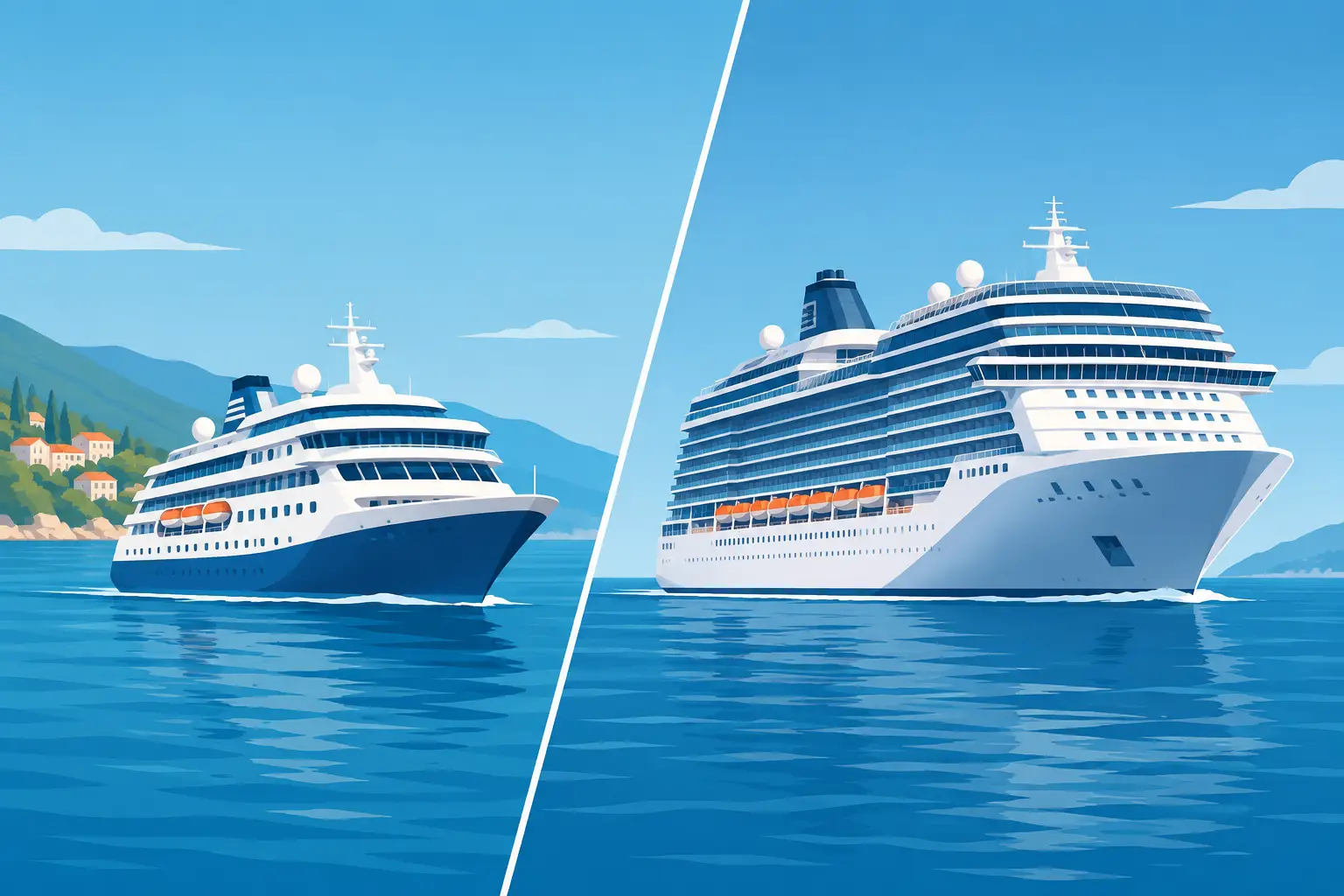
The most expensive mistake in cruise planning is not choosing the wrong cabin. It is choosing the wrong kind of ship. A small ship versus mega ship comparison is really a comparison of travel styles: do you want the ship itself to be a lively destination, or do you want it to disappear into a more intimate, destination-forward journey?
Both can be exceptional. A multigenerational family may find a large ship effortless and entertaining, while a couple celebrating an anniversary may value a quieter deck, a flexible day ashore, and a crew that quickly knows their preferred cocktail. The right answer depends less on what is objectively luxurious and more on how you want your days to feel.
Small Ship Versus Mega Ship: The Core Difference
Mega ships are designed for choice at scale. Think multiple restaurants, theaters, pools, lounges, shopping, kids' clubs, sports courts, and a full calendar of activities. They can be brilliantly efficient at keeping different travelers happy at once. If one person wants a show, another wants a spa appointment, and teenagers want a waterslide, everyone can have a satisfying afternoon without much negotiation.
Small ships are designed around access and atmosphere. Depending on the line and itinerary, they may carry fewer than 100 guests or several hundred rather than several thousand. Public spaces tend to feel more residential than resort-like, and the rhythm is often shaped by the destination rather than by onboard programming. You may spend the morning in a harbor too small for larger vessels, return for a relaxed lunch, then head back ashore for an evening walk when most day visitors have gone.
Neither experience is automatically more refined. There are polished, highly service-oriented ships in both categories, just as there are more casual options in each. The distinction is about scale, pace, and what you expect the vessel to contribute to your trip.
When a Mega Ship Makes More Sense
A large ship can be a wonderfully practical choice when your group has varied ages, interests, or energy levels. It offers built-in independence. Parents can enjoy dinner while children participate in supervised programming, and adult siblings can split off for different activities without anyone feeling stranded.
The ship is part of the vacation
On a mega ship, sea days are often a feature rather than downtime. Production shows, specialty dining, cooking classes, fitness studios, casinos, pools, and entertainment districts create plenty to do before you ever reach port. This is especially appealing for travelers who want a cruise to feel like an all-encompassing resort vacation.
Large ships also tend to offer the widest range of cabin categories. Connecting staterooms, family suites, accessible accommodations, and options at different price points can make them easier to coordinate for extended families and groups. That breadth can be valuable when a party includes grandparents who want a balcony, college-age travelers who want late-night energy, and young children who need room to play.
Familiarity and convenience can be a luxury
Many mega-ship itineraries visit marquee ports with established cruise terminals, plentiful shore excursions, and straightforward logistics. For a first-time cruiser, that predictability can lower the learning curve. You will generally find more dining times, more excursion inventory, and more spaces to settle into throughout the day.
The trade-off is that you are sharing those amenities with many other guests. Boarding, elevators, tenders, pools, and popular dining venues can feel busy at peak times. A well-selected sailing date, cabin location, and dining plan can make a meaningful difference, but a large vessel will never feel private.
Why Travelers Choose Small Ships
Small ships appeal to travelers who would rather have fewer choices, selected with intention. The experience can feel more like a floating boutique hotel, a yacht-like escape, or an expedition base camp, depending on the cruise line and region.
Smaller ports, longer stays, deeper access
Size affects where a ship can go. Smaller vessels may call in compact harbors, sail through narrower waterways, anchor near islands without major cruise infrastructure, or spend more time in places where a mega ship simply cannot dock. This matters in destinations such as the Greek Islands, the Dalmatian Coast, the Galápagos, Alaska, the Norwegian fjords, the Seychelles, and parts of French Polynesia.
That access does not mean every small-ship itinerary is automatically better. A port-intensive itinerary can be tiring, particularly if you prefer leisurely mornings and pool time. But for travelers who measure a trip by the places they experience rather than the number of onboard attractions, small-ship routing is often the main draw.
A more personal onboard rhythm
With fewer guests, service can feel more intuitive. You are more likely to recognize fellow travelers by the second evening and see familiar faces among the crew. Dining may be open seating or more flexible, dress codes can be more relaxed, and shared tables can lead to easy conversation without the formality of a large dining room.
For some clients, that intimacy is exactly the point. For others, it feels too social. If you prefer anonymity, constant activity, or the ability to change venues whenever the mood strikes, a small ship may feel limiting after several days at sea.
Cabins, Dining, and Quiet: Look Beyond the Brochure
Do not assume a small ship has larger cabins or better food, or that a mega ship has less attentive service. Those details vary significantly by cruise line, ship age, cabin category, and itinerary.
On a large ship, a standard balcony cabin may be compact, but you may have access to extensive suite areas, private lounges, reserved dining, and dedicated sun decks if you choose a premium category. On a small ship, even entry-level accommodations may feel thoughtfully designed, though some vessels have fewer balconies, limited storage, or bathrooms that reflect their more intimate footprint.
Dining deserves the same careful comparison. Mega ships usually offer variety, from casual poolside meals to reservation-only specialty restaurants. Small ships often focus on a smaller number of dining venues, with menus that change according to the region and local ingredients. A traveler who is happiest sampling a different cuisine each night may prefer the larger ship. Someone who values a calmer, less transactional dinner experience may prefer the smaller one.
Quiet is also relative. Small ships have fewer people but less physical separation from the action. A cabin near the lounge, tender platform, or engine area can still be noisy. Mega ships carry more guests, yet the right suite or stateroom in a quiet area can feel remarkably removed from the crowds. Cabin selection is not an afterthought. It is one of the most useful ways to protect your sleep and enjoyment.
Consider the Destination Before the Ship
For the Caribbean, a mega ship can make perfect sense when beach time, family entertainment, and an easygoing resort rhythm are the priorities. For the Mediterranean, the answer depends on whether you want iconic cities with big-port convenience or smaller coastal towns and islands with a more local feel.
In Alaska, travelers often benefit from looking beyond ship size alone. Large ships can offer excellent family amenities and well-developed shore programs. Smaller expedition vessels may get closer to wildlife, use Zodiacs or kayaks, and provide more flexible exploration, but they usually involve a more active, weather-dependent experience. The better choice depends on whether your ideal Alaska day is a scenic train ride and a comfortable cocktail afterward, or a rain-jacketed landing on a remote shoreline.
A sailing route can also change the calculation. A small ship crossing open ocean for several sea days may not be ideal for someone prone to motion sickness or eager for nonstop entertainment. Conversely, a mega ship on a crowded, short-port itinerary may leave a destination-focused traveler wanting more time ashore.
The Questions That Usually Reveal the Right Fit
Before comparing cruise lines, consider what would disappoint you most. Is it a quiet evening with little to do, or a pool deck where you cannot find a peaceful chair? Would you rather know the bartender's name, or have twelve dining choices? Are you traveling with people who need different kinds of fun? Do you want to see celebrated ports efficiently, or trade some headline destinations for a more unusual route?
Also consider your tolerance for logistics. Small ships may use tenders more often and may have fewer backup options when weather affects a port. Mega ships have highly structured operations, but embarkation terminals and popular shore excursions can require more patience. Neither is a flaw. They are simply different forms of travel.
A thoughtful cruise plan matches the ship, cabin, itinerary, transfers, and shore experience to the travelers actually going - not to a glossy image of what a cruise should be. At Lucy Trails Atelier, that means looking at the details that do not fit neatly into an online comparison chart, including pacing, mobility, dining preferences, family dynamics, and what support matters if plans shift.
Choose the ship that gives you more of the moments you traveled for, whether that is watching a Broadway-style show with your family or arriving quietly at a harbor before the village wakes.
Big Ship or Small Ship? Let's Find Your Perfect Cruise.
From intimate luxury ships to larger vessels filled with entertainment, the right cruise depends on how you love to travel. I'll help you compare ships, itineraries, and available perks to find your perfect match.
Plan Your Cruise