Best Expedition Cruises: How to Choose Yours
The best expedition cruises do not begin with a ship comparison. They begin with the moment you want to remember: standing quietly as a whale surfaces beside a Zodiac in Antarctica, hiking through volcanic terrain in the Galapagos, or watching polar bears from a respectful distance in Svalbard. The right voyage turns that moment into a comfortable, well-paced, remarkably well-managed trip. The wrong one can leave you paying for a level of activity, ship size, or cabin category that does not suit how you actually like to travel.
Expedition cruising is one of the most rewarding ways to reach places where traditional luxury travel is not practical. It is also more nuanced than a standard ocean cruise. Ships, guides, landing operations, weather windows, charter flights, and physical expectations all matter. Here is how discerning travelers can identify the voyage that fits them best.
What Makes an Expedition Cruise Different?
An expedition cruise is designed around access and interpretation, not Broadway-style entertainment or a fixed daily routine. The ships are generally smaller, carrying anywhere from a few dozen to a few hundred guests, and itineraries may change with wind, ice, wildlife sightings, or local conditions.
Your days often center on guided landings, Zodiac rides, naturalist talks, kayaking, snorkeling, hiking, photography outings, or cultural visits where permitted. In wild destinations, flexibility is a feature, not a flaw. A captain may alter course because a rare wildlife encounter is unfolding, or because conditions make a planned landing unsafe.
The luxury is in the quality of the experience and the ease around it: an exceptional expedition team, a warm welcome after a cold landing, thoughtful cuisine, a well-designed suite, and staff who handle the moving pieces without drama. That said, shipboard luxury ranges widely. Some vessels feel like intimate boutique hotels; others are purpose-built and polished but intentionally pared back.
The Best Expedition Cruises Match Your Travel Style
There is no single best expedition cruise line or itinerary for every traveler. A couple celebrating a milestone may prioritize a suite, fine dining, and a lower guest count. A multigenerational family might need connecting accommodations, a more relaxed activity program, and reliable logistics. A serious photographer may choose a voyage with small groups, dedicated photo instruction, and long periods ashore.
Before comparing brands, decide where you sit on three useful spectrums: active versus relaxed, immersive versus indulgent, and intimate versus social. You can have elements of all three, but identifying your priority makes the choices much clearer.
A truly active traveler may be happiest on an itinerary with frequent hikes, paddling, camping options, or longer Zodiac explorations. Someone who wants wildlife and scenery without feeling tested should seek a ship with varied excursion levels, excellent Zodiac access, and the freedom to skip a landing without missing the spirit of the day. Mobility is worth discussing candidly. Getting in and out of a Zodiac can be manageable for many guests, but uneven ground, stairs, wet landings, and changing weather are part of the experience.
Antarctica: Big Scale, High Emotion
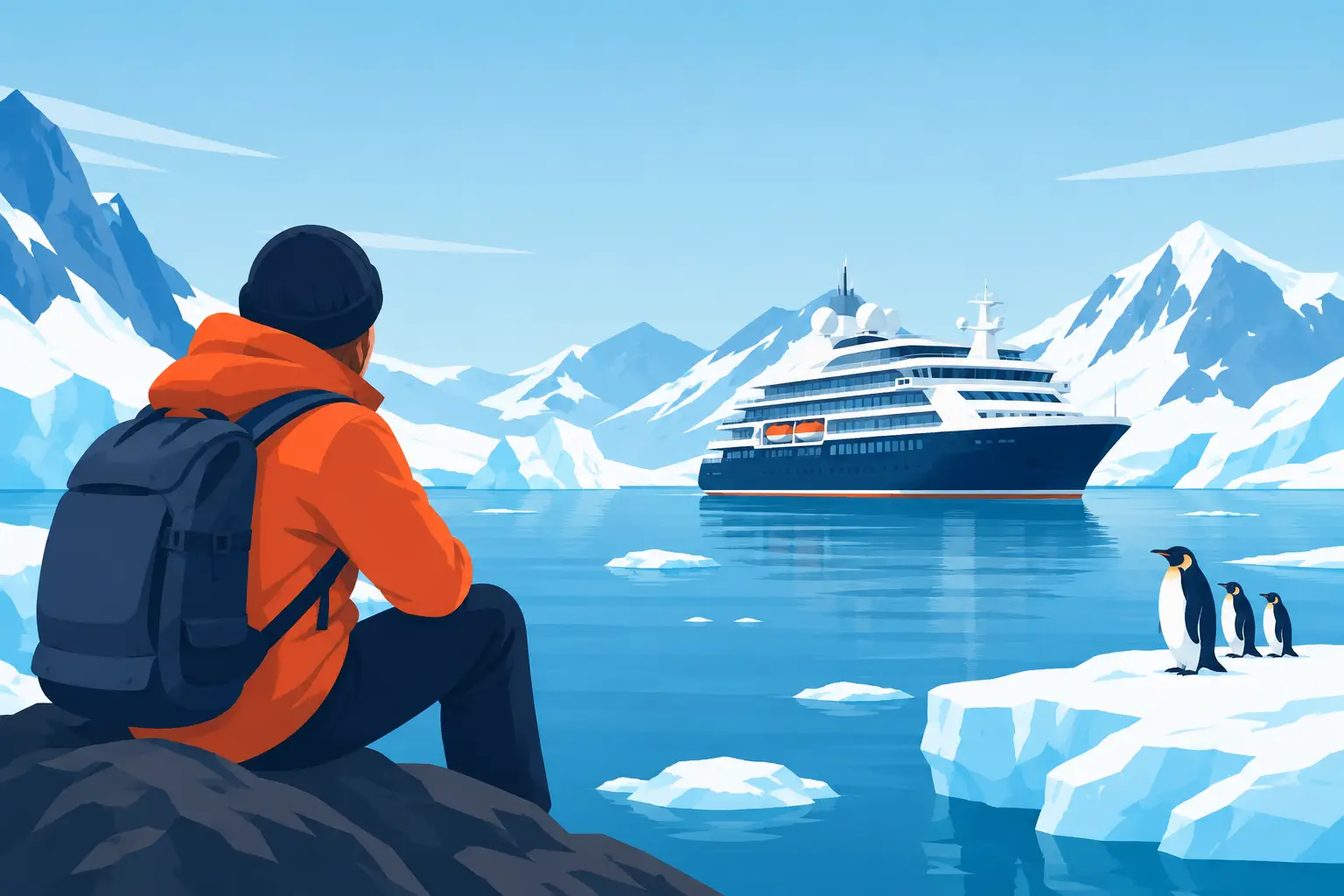
Antarctica is the iconic choice for first-time expedition travelers, and for good reason. The landscapes are otherworldly, wildlife encounters can be immediate, and the crossing from Ushuaia has a sense of occasion. Most travelers choose either a classic Antarctic Peninsula sailing or a fly-cruise option that avoids the Drake Passage.
The fly-cruise route is appealing for those short on time or concerned about rough seas, but it adds dependence on weather-sensitive flight schedules and typically comes at a higher price point. Sailing the Drake offers the full passage and can feel wonderfully cinematic when conditions cooperate. It can also be uncomfortable. A skilled advisor should not minimize that trade-off.
For Antarctica, look closely at passenger capacity and landing operations. Ships carrying fewer than 100 guests can generally land everyone at once under Antarctic visitor guidelines, while larger expedition vessels may rotate groups. Larger ships can offer more amenities, but smaller ships often mean more time ashore and a more intimate atmosphere.
The Galapagos: Wildlife at Close Range
The Galapagos is ideal for travelers who want extraordinary nature with less extreme weather and less demanding logistics than polar cruising. You may snorkel with sea lions, walk near marine iguanas, and see blue-footed boobies without needing binoculars. It works especially well for active families, honeymooners, and travelers pairing a cruise with time in mainland Ecuador or Peru.
Here, vessel size and itinerary routing matter enormously. Small yachts offer a private, residential feel and a more intimate group dynamic. Larger expedition ships can provide more cabin categories, lecture spaces, and stability. Neither is automatically better. The key is a route that includes the islands and wildlife experiences most meaningful to you, plus an excursion pace you will enjoy for the full week.
The Arctic: More Variables, More Range
Arctic expedition cruising covers a broad range of experiences. Svalbard emphasizes sea ice, seabirds, walrus, and the possibility of polar bears. Greenland offers icebergs, Inuit culture, and dramatic fjords. Arctic Canada and the Northwest Passage are longer, rarer, and more logistically complex. Alaska may be expedition-style, but its access, season, and onboard feel are very different from the High Arctic.
This is a destination where itinerary language deserves close reading. Wildlife cannot be guaranteed, and ice conditions can reshape a route. Choose an operator with deep regional experience, patient expedition leadership, and an approach that values safety and environmental care over checking boxes.
Ship Size, Cabin Choice, and the Comfort Question
Ship selection affects the entire rhythm of your trip. A small expedition yacht can feel exclusive and deeply personal, but it may have fewer dining choices, fewer accessible spaces, and more noticeable motion in rough water. A larger expedition ship may include a spa, multiple lounges, a wider range of cabins, and stabilizers, while still offering serious off-ship exploration.
Cabin selection deserves more thought than many travelers expect. On polar voyages, a lower and more central cabin can be preferable for guests sensitive to motion. On scenic routes, a balcony may be worth the investment if you value private viewing and fresh air. On a voyage with packed days ashore, you may decide a comfortable window cabin is enough and put more of the budget toward a longer itinerary or pre- and post-cruise time.
Do not assume the highest category is always the best value. A beautifully located mid-level cabin on the right ship often creates a better trip than a grand suite on a vessel whose pace or guest count feels wrong.
Look Beyond the Brochure Itinerary
Two cruises that appear nearly identical online can deliver very different days. Ask how many guests are assigned to each guide, how landing groups are managed, whether kayaks or paddleboards are included or limited, and how activity levels are organized. For destinations with wildlife, find out whether the expedition team includes naturalists with local expertise, marine biologists, historians, or photographers.
Also consider the bookends of the voyage. Antarctic sailings may require an overnight in Buenos Aires and Ushuaia. Galapagos trips involve flights to the islands and baggage considerations. Arctic voyages can have limited flight schedules, weather disruptions, and long transfer days. This is where polished planning protects the experience. Building in sensible buffers, selecting the right hotels, arranging transfers, and knowing who to call when a connection changes can make the difference between a rushed departure and a calm beginning.
Travel insurance and medical evacuation coverage are also not an afterthought for remote itineraries. Requirements vary by destination and operator, but the practical question is simple: if weather, illness, or a delayed flight interrupts the plan, do you have appropriate coverage and a real person helping you sort the next step?
When to Book an Expedition Voyage
The most coveted cabins, especially solo cabins and well-positioned suites, can disappear far ahead of departure. Planning 12 to 18 months out is wise for Antarctica, the Galapagos during preferred school-break periods, popular Arctic departures, and celebratory trips involving several households.
Booking early also gives you more time to shape the larger journey. Add a few nights in Patagonia before Antarctica, pair Ecuador with the Galapagos, or build in a private Icelandic stay around an Arctic sailing. These extensions should feel like part of one considered trip, not an afterthought tacked onto a cruise confirmation.
At Lucy Trails Atelier, expedition planning starts with the questions that brochures cannot answer: how active you truly want to be, which comforts matter most, how much uncertainty feels exciting rather than stressful, and what will make the journey feel distinctly yours. The best choice may be a small yacht, a luxury expedition ship, or a more adventurous vessel with an extraordinary team.
Choose the voyage that gives you more than remarkable photographs. Choose the one that leaves room to look up, stay present, and let a remote corner of the world change your sense of scale.
Lucy Trails Atelier
Continue Planning Your Expedition Cruise
Your Next Adventure Starts at Sea
From Antarctica's icy landscapes to the wildlife-rich Galápagos, the right expedition cruise can take you somewhere extraordinary. I'll help you compare ships, cabins, itineraries, flights, transfers, and pre- and post-cruise arrangements to create a journey that fits your travel style.
Explore Expedition Cruises